CALL NOW FOR A FREE QUOTE 866.760.8194

What Is a Waste Broker and What Do They Do?
Managing commercial waste has become more complex as businesses juggle rising disposal costs, sustainability expectations, and a growing number of vendors. Many organizations reach a point where handling waste internally creates inefficiencies instead of savings. That is where a waste broker enters the picture.
Understanding waste brokers starts with recognizing that this role is not about hauling trash. A waste broker acts as a strategic partner that oversees, coordinates, and optimizes waste services across multiple vendors, locations, and waste streams. For businesses that want better control, clearer reporting, and fewer operational headaches, working with a waste broker can change how waste management functions day to day.
What Is a Waste Broker?
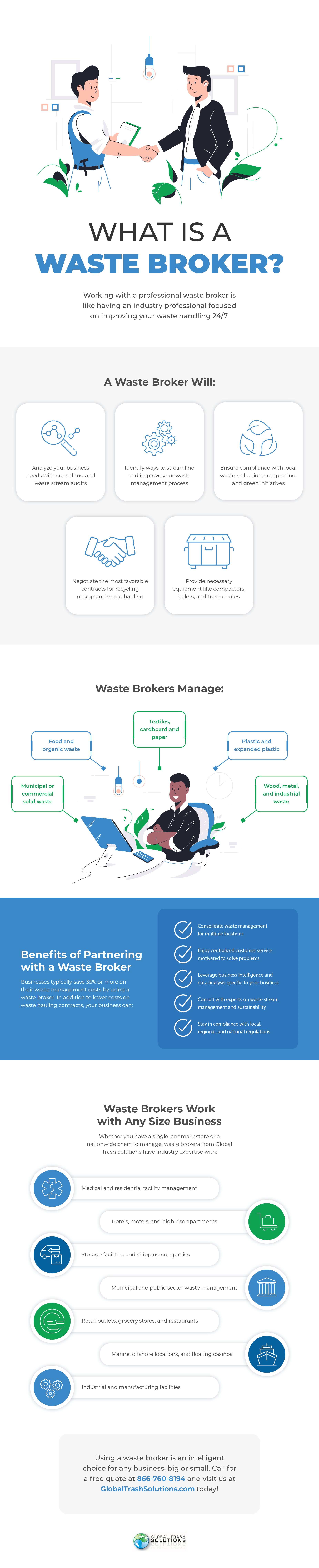
At its core, a waste broker, also sometimes known as a garbage broker or trash broker, serves as an intermediary between a business and the companies that collect, process, recycle, or dispose of waste. Instead of owning trucks or landfills, the broker focuses on planning, coordination, and accountability.
A waste management broker evaluates how waste is generated, where it goes, and how much it costs. From there, they build a service structure that fits the business rather than forcing the business to adapt to a single hauler’s limitations. This approach allows companies to access better pricing, specialized services, and consistent oversight without managing multiple vendor relationships internally.
What a Waste Broker Actually Does
A waste broker manages the operational details that businesses rarely have time to oversee, creating structure and consistency across all waste services.
- Reviews current waste operations, including contracts, invoices, pickup schedules, container sizes, and waste volumes to uncover inefficiencies and unnecessary costs
- Identifies service gaps and sources qualified vendors such as haulers, recycling facilities, composting providers, and specialty processors
- Negotiates rates and aligns service schedules to match actual business needs rather than default vendor recommendations
- Monitors ongoing service performance, addresses missed pickups, and resolves billing discrepancies before they escalate
- Adjusts services as operations change, helping maintain consistency across locations and prevent long-term cost creep
Types of Waste a Broker Can Manage
Many businesses assume waste brokers only handle standard trash service, but their scope typically extends far beyond basic disposal.
- Municipal solids and general garbage from daily business operations
- Cardboard and paper generated through shipping, retail, and office use
- Plastics, including standard plastic streams and expanded plastic materials that require specialized handling
- Metal waste from industrial, manufacturing, and maintenance activities
- Wood waste from pallets, construction, and renovation projects
- Textiles generated by retail, hospitality, medical, or industrial operations
This broad management approach allows businesses to centralize oversight under one partner instead of coordinating multiple vendors independently.
How Waste Brokers Help Control Costs
Cost reduction is one of the most immediate benefits of working with a garbage broker. Instead of accepting standard pricing from a single hauler, businesses gain access to competitive bids from multiple providers.
A waste broker also ensures that services are properly sized. Overfilled dumpsters, excessive pickup frequency, or underutilized containers quietly inflate costs over time. Adjusting these variables can significantly reduce monthly spend without sacrificing service quality.
Invoice auditing is another critical function. Billing errors, fuel surcharges, and extra fees often go unnoticed when waste management is not actively monitored. A trash broker reviews invoices for accuracy and resolves discrepancies before they impact budgets.
Supporting Sustainability and Diversion Goals
Sustainability initiatives require more than good intentions. They require data, vendor coordination, and ongoing performance tracking. Waste brokers play a key role in making these efforts achievable.
By expanding recycling and composting programs, a waste management broker helps divert material away from landfills. Brokers also track diversion rates and waste volumes, giving businesses the data needed for internal reporting or external sustainability disclosures.
For organizations pursuing zero-waste or landfill-reduction goals, brokers align services with those objectives while maintaining operational efficiency. This balance helps sustainability efforts move forward without disrupting daily operations.

Industries That Benefit From Waste Brokers
Waste brokers work with organizations of all sizes across many industries. Facility management teams, hotels, restaurants, and residential apartment properties rely on brokers to keep waste services consistent and cost-controlled.
Industrial, marine and offshore, medical, and public sector organizations benefit from structured oversight that supports compliance and specialized waste handling. Food retail, non-food retail, gas stations, and storage and logistics operations use garbage brokers to manage fluctuating volumes, recycling needs, and vendor coordination across locations.
What the Process Looks Like
Working with a waste broker typically begins with an assessment phase. The broker reviews existing contracts, invoices, and service configurations to build a clear picture of current operations.
Next comes the optimization phase. The broker identifies service changes, negotiates with vendors, and implements a revised waste strategy tailored to the business. Once services are in place, the broker continues monitoring performance, managing vendors, and adjusting services as needs evolve.
This ongoing relationship is what separates a waste broker from a one-time consultant. The goal is long-term efficiency rather than short-term fixes.
When Hiring a Waste Broker Makes Sense
Certain signs indicate that a business may benefit from working with a trash broker. Rising waste costs without clear explanation is one of the most common. Managing multiple vendors across locations can also strain internal teams.
Limited visibility into waste data, inconsistent service quality, or pressure to meet sustainability targets are additional indicators. When waste management becomes a distraction instead of a background function, a waste management broker can restore control and clarity.
A Clearer Path to Smarter Waste Management
Global Trash Solutions helps businesses take control of waste management through experienced waste brokers and waste consultants who understand how operations actually function. Our team brings structure, accountability, and strategic oversight to waste programs that are often fragmented, costly, or difficult to manage internally.
By coordinating vendors, optimizing service configurations, and continuously monitoring performance, our waste brokers turn waste management into a predictable and streamlined process. Our waste consultants go a step further by identifying long-term opportunities for cost reduction, improved diversion, and stronger sustainability outcomes.
For organizations focused on cost control, operational efficiency, and measurable sustainability progress, partnering with Global Trash Solutions creates a clearer path forward and a waste strategy built to scale with your business.
Recent Post
Types of Commercial Waste Streams Explained
Nearly every business generates multiple types of waste, but those materials do not…
Read More >Recycling Contamination: Causes and Solutions
Recyclable material can quickly lose its value when food residue, plastic film, or…
Read More >