CALL NOW FOR A FREE QUOTE 866.760.8194

Types of Waste You Can Put in a Commercial Compactor
Business owners who are considering buying, leasing, or renting a compactor often ask the same question. What can you put in a trash compactor without causing problems? The answer depends on the type of waste your business produces, the compactor you use, and local regulations.
Ahead, we’ll explain the most common waste types accepted in commercial compactors along with important limits to keep in mind.
General Waste Types Commonly Accepted in Commercial Compactors
Commercial garbage compactors are designed to handle everyday solid waste generated by businesses across many industries. This includes materials that compress easily and are safe for standard compactor operation.
Common examples include:
- Paper products
- Cardboard packaging
- Plastic containers
- Food waste
- Disposable utensils
- General office or retail trash
- Textiles
- Boxes, crates, and pallets
- Non-hazardous medical waste
- Shelving, signage, and small fixtures
These waste streams make up the majority of compactor use in retail centers, warehouses, office buildings, and multi-tenant properties.
Proper loading helps maintain performance. Breaking down boxes and spreading waste evenly reduces strain on the hydraulic system and prevents jams during waste compaction.
Organic and Food-Related Waste in Commercial Compactors
Many businesses produce organic waste, especially restaurants, grocery stores, and food service operations. Commercial compactors can handle food waste that’s bagged and relatively dry. Spoiled packaged food leftovers and expired products can be safely compacted when liquids are removed.
Excess moisture creates odor issues and can damage internal components over time. Using heavy-duty liners, draining liquids, and scheduling regular pickups helps control these concerns. In high-volume food operations, compactors are often paired with additional waste solutions to manage moisture and pests.
A Word on Compacting Wet Waste Materials
Food manufacturing, grocery, healthcare, hospitality, and other commercial businesses often generate waste with high liquid content. While liquids can’t be compacted, wet waste can. With the right compactor, you can reduce food waste, organic material, hygiene products, non-hazardous medical waste, and other materials that decay and decompose for safe disposal.
Bulky and Irregular Waste That May Be Allowed
Some bulky or irregular items can go into a commercial garbage compactor, depending on the machine’s design and capacity. Flattened cardboard pallets, foam packaging, broken furniture, and plastic crates are examples that may be acceptable.
Weight and shape matter more than size alone. Dense materials like wood or rubber compress less efficiently and place more stress on the ram. Always confirm that your compactor is rated for heavier or awkward loads before placing them inside.
Waste Types That Are Never Allowed in Commercial Compactors
Certain materials should never be placed in a commercial compactor due to the potential for safety risks, equipment damage, and regulatory violations:
- Hazardous Materials and Chemicals: Paint thinners, solvents, pesticides, and industrial chemicals pose fire and contamination risks and must be handled separately.
- Liquids, Oils, and Paints: Free-flowing liquids leak from compacted waste and can damage hydraulic systems while creating environmental hazards.
- Aerosol Cans and Pressurized Containers: These items can explode under pressure causing serious injury and equipment damage.
- Batteries and Electronic Waste: Batteries and electronics contain hazardous components and are regulated under specific disposal laws.
- Medical and Biohazard Waste: Sharps, pharmaceuticals, and contaminated materials require specialized disposal and are never suited for compactors.
- Propane Tanks and Fuel Containers: Pressurized fuel containers present explosion risks and must always be kept out of compactors.
- Ferrous Metals: Anything made of iron, including wrought iron, steel, or stainless steel, should be kept out of trash compactors.
- Glass: Bottles, jars, light bulbs, windows, mirrors, and anything else made of glass can shatter and damage a compactor.
How Local Regulations Affect What You Can Compact
Local and state regulations play a major role in determining what materials are allowed in compacted trash. Some jurisdictions restrict mixing food waste with other trash or require separation of recyclables such as plastics, metals, and paper. Others impose penalties for compacting prohibited items even if the compactor can physically handle them.
Before installing a compactor, review municipal waste rules and coordinate with your waste hauler. Compliance protects your business from fines, service disruptions, and environmental liability.
Why Compactor Type Matters
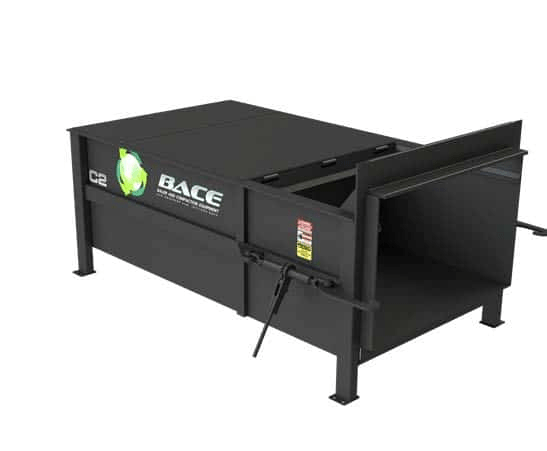
Not all commercial compactors are built the same. Self-contained compactors are commonly used for wet waste and food applications, while stationary compactors are more suitable for dry waste like cardboard and packaging. Vertical compactors may be used if you have limited space.
If you have bulky waste consisting of large, heavy materials, such as pallets, crates, boxes, barrels, drums, appliances, and furniture, a pre-crusher compactor has the power to handle it. Standard models may not be able to compact such materials.
Using the wrong compactor increases breakdown risk and maintenance costs. Matching compactor type, size, and duty rating to your waste profile improves efficiency and extends equipment life.
Using Your Commercial Garbage Compactor Wisely
Understanding what waste you can put in a commercial compactor helps with planning and cost reduction. Most everyday trash, including cardboard, plastic, metal, and textiles, is compatible when prepared properly. Heavy wood or bulky industrial materials may require specific models or alternate solutions. Keep hazardous or liquid waste out of the compactor to protect equipment and staff.
Frequently Asked Questions
What are the different types of commercial waste?
Commercial waste includes general trash, recyclables, organic food waste, bulky items, and nonhazardous industrial materials. The mix varies by industry and facility size.
What should you not throw in a compactor?
Hazardous chemicals, liquids, batteries, electronics, and pressurized containers should never go into a compactor. These items pose safety and compliance risks.
Can you put garbage in a compactor?
Yes. General bagged garbage is one of the primary uses of a commercial compactor. Liquids should be removed before loading and waste compaction.
Partner With Global Tash Solutions
A well-matched compactor improves your waste management process and cuts hauling expenses. If you are exploring commercial compactors or need commercial compactor repair services, Global Trash Solutions provides equipment sales, rentals, and expert service support. Call 866-760-8194 for help finding a solution that suits your waste handling needs and budget, and keeps your business running smoothly.
Recent Post
What to Look for in a Commercial Waste Hauling Partner
Selecting the right provider for waste hauling affects costs, compliance, and day-to-day efficiency.…
Read More >Key Questions to Ask Before Hiring a Waste Consultant
Waste costs often go unnoticed until they begin to impact budgets, operations, and…
Read More >