CALL NOW FOR A FREE QUOTE 866.760.8194

The Pros and Cons of Using a Waste Broker
Commercial waste management decisions rarely stay simple for long. Costs shift, service needs change, and compliance requirements can add pressure as businesses grow or operate across multiple locations.
Over time, many organizations step back to evaluate how their waste services are structured and if their current approach still makes sense. Below, we’ll explore the pros and cons of working with a waste broker and help you decide if a waste broker is right for your business.
What Is a Waste Broker and How Do They Work?
A waste management broker, also known as a garbage or trash broker, manages waste services without owning trucks or hauling equipment. Instead, they coordinate service through a network of local and regional haulers on behalf of their clients.
A waste broker’s responsibilities often include negotiating rates, setting up service schedules, managing billing, and assisting with changes or service concerns over time. For businesses without internal waste expertise, working with a trash broker can centralize these tasks under a single point of contact.
The Pros of Using a Waste Management Broker
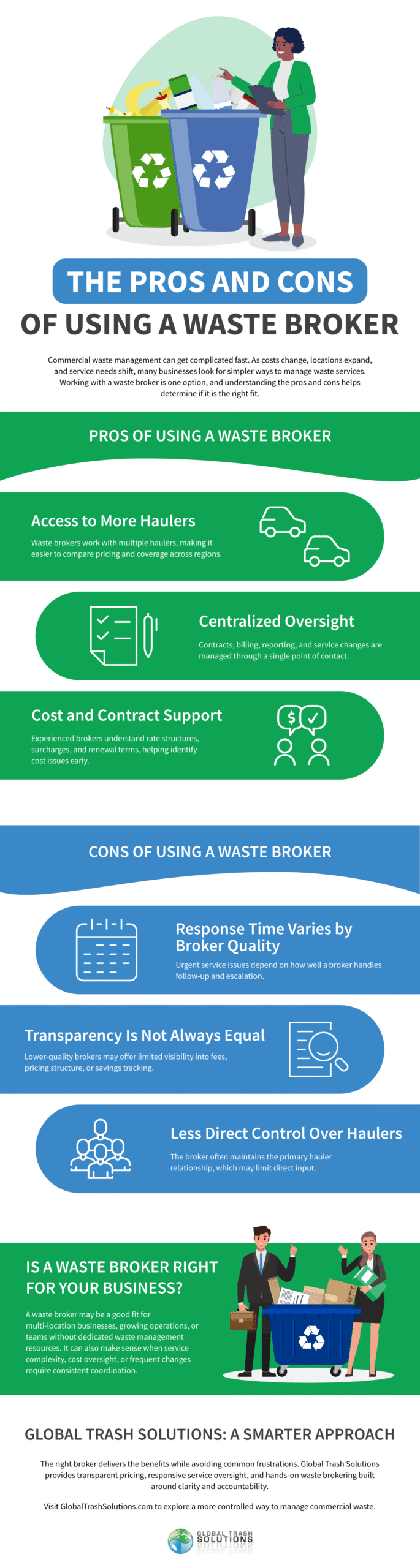
Using a waste management broker can bring operational and financial benefits, especially for businesses with multiple locations or changing service needs.
Access to More Haulers and Competitive Pricing
One of the main benefits of working with a garbage broker is broader access to haulers across different markets. Brokers typically maintain relationships with multiple providers, allowing them to compare pricing and availability more efficiently.
This can be helpful for companies expanding into new regions or operating in areas where local waste options are limited.
Centralized Waste Management Oversight
Managing waste directly with multiple haulers often means juggling separate contracts, invoices, and service contacts. A waste management broker consolidates these responsibilities, making oversight more manageable.
Billing is often streamlined, reporting becomes easier to track, and service updates can usually be handled through one channel rather than several.
Support From Waste Management Experts
Waste contracts can include fuel surcharges, environmental fees, and automatic rate increases. Waste management experts are familiar with these details and can help identify areas where costs may increase over time.
This experience is especially useful during contract renewals, audits, or service reviews.
Flexibility as Business Needs Change
For companies adding locations, adjusting waste volumes, or changing service frequency, brokers offer flexibility. New sites can be onboarded more quickly, and service adjustments can often be handled without restarting the vendor search process.
This makes the waste broker model appealing for retail chains, property portfolios, and growing organizations.
The Cons of Using a Waste Management Broker
While a waste broker offers convenience and reach, there are a few aspects of the model that are worth understanding to avoid surprises later.
An Extra Step in Communication
Working with a trash broker means communication usually flows through an intermediary instead of directly to the hauler. For routine requests, this often works smoothly. For urgent issues, response time is closely tied to how responsive and organized the broker is, including their follow-up practices and escalation process.
Clear expectations around communication can help keep service running smoothly.
Fee Structure and Cost Visibility
Garbage brokers may be compensated through service margins or disclosed management fees. This does not automatically result in higher costs, but transparency can vary depending on the broker’s practices and reporting standards.
Understanding how pricing is built and how savings are tracked helps businesses evaluate the true value of the arrangement.
Differences in Service Approach
Not all waste management brokers offer the same level of involvement. Some focus mainly on sourcing competitive rates, while others provide ongoing reviews, reporting, and compliance support.
Choosing a highly rated waste broker whose service approach aligns with your needs matters more than choosing one based on pricing alone.
Limited Direct Control Over Hauler Choice
In many cases, the broker maintains the primary relationship with the hauler. This can simplify coordination, though it may reduce direct input into hauler selection in certain situations.
For businesses that value long-standing relationships with specific local providers, this is worth considering.

When a Waste Broker Is Often a Good Fit
Waste brokers are commonly a good fit for multi-location businesses, companies operating across state lines, and organizations without dedicated waste staff. They are also helpful when waste costs fluctuate or when service oversight requires consistent attention.
Businesses focused on reducing administrative workload often benefit from having waste management experts coordinate services.
When Working Directly With a Hauler May Make Sense
Single-location businesses or operations with stable waste streams sometimes prefer working directly with a hauler. Direct relationships can offer familiarity and straightforward communication when service needs rarely change.
In these situations, a direct approach may feel more efficient than involving a garbage broker.
Questions to Ask Before Choosing a Waste Broker
Before entering a relationship with a waste management broker, asking direct and practical questions helps set expectations and avoid confusion later. These questions focus on transparency, communication, and long-term fit.
- How are your fees structured, and are they fully disclosed upfront?
- Who owns the relationship with the waste hauler, the broker or the customer?
- How are service issues handled, and what is the escalation process if problems persist?
- What level of reporting is provided, and how often is performance reviewed?
- How do you track cost savings and service improvements over time?
- Will I have a dedicated point of contact familiar with my locations and waste streams?
Clear answers to these questions make it easier to evaluate value beyond pricing alone and determine if the broker’s approach aligns with your operational needs.
A Smarter Way to Handle Commercial Waste
For businesses that want the advantages of waste brokering without the common frustrations, the right partner makes all the difference. Global Trash Solutions (GTS) was built to deliver the benefits companies look for when working with waste management experts, while intentionally avoiding the gaps that often concern decision makers.
GTS provides transparent pricing, clear communication, and hands-on service oversight. Clients retain visibility into hauler relationships, receive consistent reporting, and work with a dedicated team that understands their locations and goals.
By combining broad market access with proactive management, Global Trash Solutions offers waste brokering services that simplify operations, control costs, and support long-term compliance without adding unnecessary complexity. Contact us for a free quote today!
Recent Post
What to Look for in a Commercial Waste Hauling Partner
Selecting the right provider for waste hauling affects costs, compliance, and day-to-day efficiency.…
Read More >Key Questions to Ask Before Hiring a Waste Consultant
Waste costs often go unnoticed until they begin to impact budgets, operations, and…
Read More >