CALL NOW FOR A FREE QUOTE 866.760.8194
Types of Commercial Waste Streams Explained
Nearly every business generates multiple types of waste, but those materials do not all belong in the same container or collection program. Cardboard, food scraps, electronics, construction debris, and regulated materials each have different recycling, recovery, or disposal options.
Knowing which commercial waste streams your business generates can help you improve sorting, choose appropriate services, and avoid unnecessary disposal costs.
What Is a Commercial Waste Stream?
A commercial waste stream is a category of discarded material that follows a particular collection, processing, recovery, treatment, or disposal path. A business may have separate waste streams for cardboard, food waste, electronics, hazardous materials, and general trash.
How Businesses Classify Their Waste Streams
To determine where a material belongs, businesses must consider what it contains, its condition, how it was generated, and the services available for it. The main considerations include:
- Material type: What the waste contains, such as paper, plastic, metal, food, or chemicals
- Condition: The presence of contamination, mixed materials, coatings, or chemical treatments
- Source: The operation or process that generated the waste
- Regulatory status: Any laws or regulations that affect its handling
- Available services: What local haulers, recyclers, and processing facilities accept
Two items made from the same material may require different handling. Untreated wood may qualify for recycling or reuse, while painted or treated wood may require another process. Provider requirements also vary, so a material accepted by one recycling program may be rejected by another.
The Main Types of Commercial Waste Streams
Businesses generate diverse waste streams that fall into several broad categories.
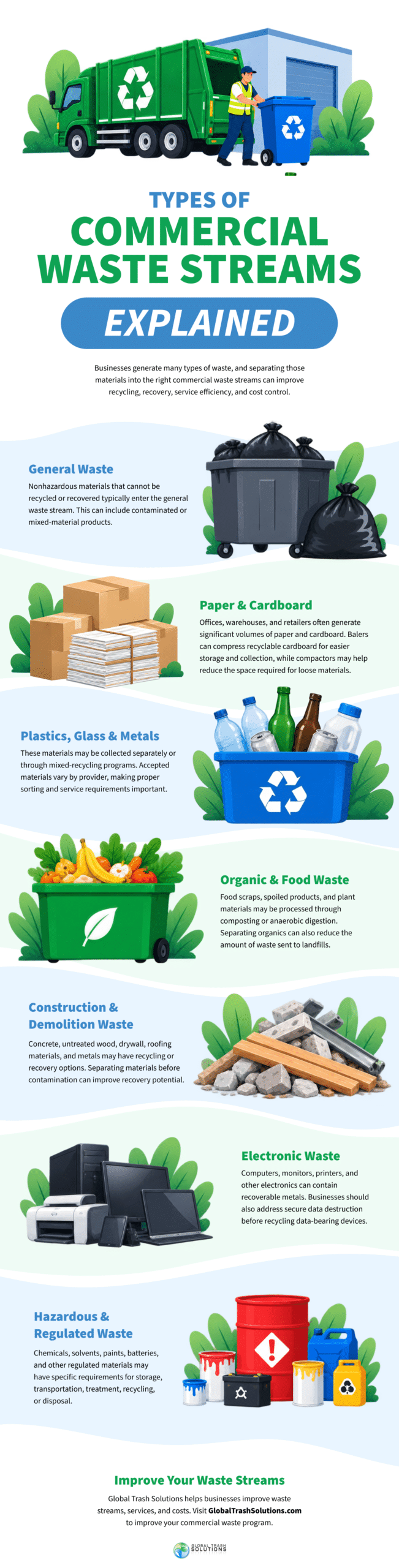
General Waste
General waste includes nonhazardous materials that are not accepted by the business’s recycling or recovery programs. Contaminated and multi-material products may also enter this stream when available services cannot recover them.
Paper and Cardboard
Paper and cardboard are common in offices, retail locations, and warehouses. Businesses with high volumes may use a baler to compress these materials into bales for storage and collection.
A compactor can reduce the space required for loose materials, depending on the equipment and collection program. Businesses should confirm how paper and cardboard must be prepared before placing them in a baler, compactor, or recycling container.
Plastics, Glass, and Metals
Plastic, glass, and metal may be collected separately or through a mixed-recycling program. Acceptance depends on the provider and local processing options.
Many programs accept rigid containers such as PET bottles, while plastic films usually require separate collection. Some providers also collect glass separately from other recyclables. Aluminum can be recycled repeatedly without losing its fundamental properties, which makes it valuable to recover.
Organic and Food Waste
Food waste includes scraps, spoiled products, and materials left over from food preparation. Organic waste is a broader category that can include plant trimmings and other biodegradable materials.
Available organics programs may send these materials to composting or anaerobic digestion. Composting produces a soil amendment. Anaerobic digestion can produce biogas for energy and residual material that may have a beneficial use.
Separating organic waste can reduce the amount sent to a landfill. Its effect on costs depends on service rates, collection requirements, and waste volume.
Construction and Demolition Waste
Construction and demolition waste can include concrete, wood, drywall, roofing materials, and metal. Separating recyclable materials before they become mixed or contaminated may improve their recovery potential.
Clean drywall may be accepted where gypsum recovery is available. Businesses should confirm preparation and collection requirements with the recycler before establishing a dedicated stream.
Electronic Waste
Electronic waste includes computers, monitors, printers, and other discarded devices. Electronics recyclers can recover metals such as gold, silver, and palladium from certain components.
Businesses should sanitize data-bearing devices before recycling or use a qualified provider that offers secure data destruction. The appropriate method depends on the storage device and the sensitivity of the information.
Hazardous and Regulated Waste
Hazardous and regulated waste may include certain chemicals, solvents, paints, and batteries. Classification and handling requirements depend on the material, its characteristics, the amount generated, and applicable regulations.
Some shipments require documentation showing how the waste was transported and received. Businesses should identify these materials and confirm the requirements before arranging storage, transportation, recycling, treatment, or disposal.

How to Evaluate and Improve Your Waste Streams
A commercial waste stream analysis identifies what a business discards and where each material goes. Reviewing these waste management streams can reveal opportunities to improve sorting, service, and costs.
- Identify discarded materials. Review every department, including break rooms, production areas, and loading docks.
- Review containers and service. Confirm that container sizes, locations, and pickup schedules match actual waste volumes.
- Find diversion opportunities. Look for materials that could enter a recycling or recovery program. High-volume materials may justify dedicated containers or equipment.
- Review costs and adjust. Check hauling invoices for extra pickups, overfilled containers, and other signs that service levels no longer match waste volumes.
Waste management programs should be reassessed as operations and material volumes change. Containers, equipment, and pickup schedules may need to change with them.
Put Your Waste Streams to Work
A well-designed waste management program can reduce unnecessary disposal costs and improve recycling. Global Trash Solutions can identify practical ways to improve your waste collection program.
Through waste brokering, GTS can manage hauler relationships, negotiate contracts and pricing, and optimize collection services. Waste consulting provides a deeper analysis of waste streams and current services to find opportunities for better cost control.
Contact Global Trash Solutions for a free consultation and find out where your waste stream management program can improve.
Frequently Asked Questions
What is a waste stream?
A waste stream is the flow of discarded materials from where they are generated through collection, processing, recovery, treatment, or disposal. Businesses may have separate waste management streams for recycling, general trash, organic waste, electronics, and regulated materials.
What is a commercial waste stream analysis?
A commercial waste stream analysis examines the materials a business discards, how they are collected, and where they ultimately go. It can identify ways to separate diverse waste streams, improve recycling, and adjust collection services.
How can waste stream management improve a waste program?
Effective waste stream management matches materials with the appropriate containers, collection schedules, and recovery or disposal services. It can reduce contamination, prevent unnecessary pickups, and uncover opportunities to control costs.
Recent Post
Types of Commercial Waste Streams Explained
Nearly every business generates multiple types of waste, but those materials do not…
Read More >Recycling Contamination: Causes and Solutions
Recyclable material can quickly lose its value when food residue, plastic film, or…
Read More >