CALL NOW FOR A FREE QUOTE 866.760.8194

The Future of Waste Management Explained
Waste management is evolving quickly as businesses, cities, and industries face rising disposal costs, stricter environmental expectations, and growing waste volumes. Organizations are looking for smarter systems that reduce landfill reliance while improving operational efficiency.
The future of waste management is shaped by technology, data, sustainability initiatives, and more strategic planning around how waste is generated, tracked, and processed. Businesses are increasingly turning to digital tools, consulting services, and improved recycling programs to manage waste streams more effectively.
Understanding the future of waste management requires looking at emerging trends, new technologies, and the practical strategies organizations are using to reduce waste costs and environmental impact.
What Is the Future of Waste Management?
The future of waste management centers on improving how materials are handled throughout their lifecycle. Instead of focusing only on disposal, organizations are adopting systems that emphasize waste reduction, recycling, data tracking, and sustainability planning.
Modern waste programs often combine:
- Advanced waste tracking systems
- Improved recycling and diversion programs
- Waste consulting services
- Waste brokering to optimize hauling services
- Waste management software for reporting and analysis
These strategies help businesses monitor waste generation, control costs, and identify opportunities to reduce landfill dependence.
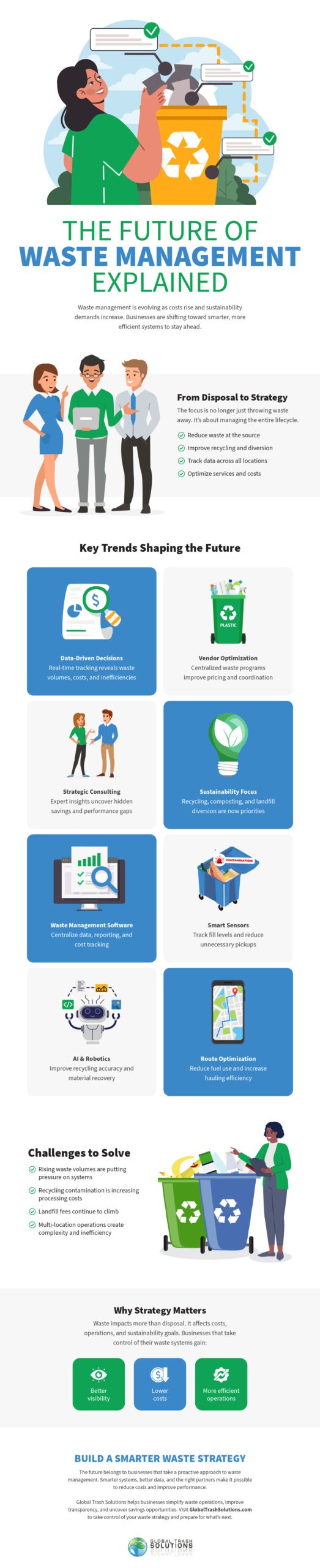
Key Trends Shaping the Future of Waste Management
Several trends are reshaping how companies and municipalities approach waste handling. These developments highlight the future aspects of waste management that will define the industry in the coming years.
Data-Driven Waste Tracking
Businesses are increasingly using digital tools to monitor waste generation and service schedules. Waste management software provides centralized reporting that helps organizations track waste volumes, analyze service frequency, and identify inefficiencies.
Data visibility allows companies to make informed decisions about recycling programs, waste reduction strategies, and vendor performance.
Increased Focus on Sustainability
Many organizations now prioritize sustainability goals such as landfill diversion and material recovery. Recycling programs, composting initiatives, and packaging reductions are becoming common strategies used to improve environmental outcomes.
These sustainability initiatives are expected to remain a major component of the future aspects of waste management.
Vendor Optimization and Waste Brokering
Businesses operating across multiple locations often work with several waste haulers. Managing these relationships can become complex and expensive without a centralized strategy.
Waste brokering helps organizations optimize vendor relationships by identifying competitive pricing, coordinating services, and consolidating waste programs across multiple locations.
Strategic Waste Consulting
Waste consulting services help businesses evaluate their current waste systems and identify areas for improvement. Consultants analyze waste streams, service frequency, equipment usage, and recycling programs to reduce costs and improve operational efficiency.
Many companies find that professional analysis reveals opportunities to significantly reduce waste expenses.
Waste Management Technologies Transforming the Industry
Technology plays a major role in the future of waste management. New tools and systems are helping organizations improve efficiency while reducing environmental impact.
Smart Waste Monitoring Systems
Smart sensors installed in dumpsters and compactors can track fill levels and notify service providers when pickups are needed. This reduces unnecessary hauling trips and improves route efficiency.
Waste Management Software
Waste management software allows businesses to track waste costs, service schedules, recycling rates, and vendor performance across multiple locations. These systems improve reporting accuracy and help organizations identify opportunities to reduce expenses.
AI and Robotics in Recycling
Artificial intelligence is being used in recycling facilities to improve sorting accuracy. Robotics can identify materials on conveyor belts and separate recyclables more efficiently than traditional methods.
These waste management technologies are increasing recycling rates and improving material recovery.
Route Optimization Technology
Waste hauling companies are increasingly using software that analyzes traffic patterns, service frequency, and container fill levels to design more efficient pickup routes
Improved routing reduces fuel consumption and lowers operational costs.
Innovative Waste Management Solutions for Businesses
Organizations are adopting a variety of innovative waste management solutions to address growing operational and environmental demands.
Waste Reduction Programs
Businesses are implementing waste reduction strategies that focus on minimizing waste generation before it reaches disposal systems. This may include changes to packaging, procurement practices, and inventory management.
Recycling and Diversion Programs
Improved recycling infrastructure allows companies to divert large portions of their waste away from landfills. Materials such as cardboard, plastics, metals, and organic waste can often be recovered and reused.
Equipment Upgrades
Modern compactors and balers help businesses manage large waste volumes more efficiently. Proper equipment can reduce hauling frequency and improve recycling processes.
Sustainability Reporting
Organizations are increasingly required to track waste diversion and environmental impact. Waste data reporting helps companies measure sustainability progress and meet regulatory requirements.

Future Challenges of Waste Management
While the industry is evolving rapidly, several future challenges of waste management continue to affect businesses and municipalities.
1. Rising Waste Volumes
Global waste production continues to increase due to population growth, urban development, and expanding consumer demand. Managing higher waste volumes requires more efficient infrastructure and improved recycling systems.
2. Contamination in Recycling Streams
Recycling programs often struggle with contamination when non-recyclable materials enter recycling bins. Contamination increases processing costs and reduces the effectiveness of recycling programs.
3. Increasing Disposal Costs
Landfill costs continue to rise in many regions due to limited capacity and environmental regulations. Businesses must find ways to reduce landfill waste to control long-term disposal expenses.
4. Multi-Location Waste Complexity
Organizations operating across multiple locations may work with different waste vendors, service schedules, and recycling programs. Managing these systems without centralized oversight can create inefficiencies.
These challenges highlight the need for smarter waste strategies supported by data, technology, and professional guidance.
Why Businesses Are Rethinking Waste Management Strategies
Many organizations are moving away from simple waste hauling services and adopting more strategic waste management programs.
Businesses increasingly recognize that waste systems affect operational costs, environmental impact, and regulatory compliance. Companies are investing in data tracking, consulting services, and technology platforms to improve how waste is managed.
A proactive waste strategy can help organizations reduce costs, improve sustainability performance, and streamline operations.
Frequently Asked Questions
Will zero-waste programs become more common in the future?
Yes. Many cities and organizations are developing long-term zero-waste strategies that focus on reducing landfill disposal through recycling, composting, and material reuse programs.
How do government regulations influence the future of waste management?
Environmental regulations are becoming stricter in many regions. These policies encourage recycling programs, landfill diversion efforts, and improved waste reporting requirements for businesses.
Are waste-to-energy systems part of the future of waste management?
Waste-to-energy facilities convert certain types of waste into electricity or fuel. While not a complete replacement for recycling, these systems can help reduce landfill volumes and recover energy from non-recyclable materials.
How can businesses measure waste reduction progress?
Businesses often track key metrics such as landfill diversion rates, recycling percentages, waste generation per facility, and hauling costs. Waste management software and consulting services can help organizations monitor these metrics.
Build a Smarter Waste Strategy With Global Trash Solutions
The future of waste management is driven by smarter planning, improved technology, and strategic partnerships that help organizations control costs and improve sustainability outcomes.
Global Trash Solutions works with businesses across many industries to implement more efficient waste programs. Our services include waste consulting, waste brokering, IntellaWaste waste management software, and commercial equipment solutions designed to streamline operations and reduce waste expenses.
If your business is looking to prepare for the future aspects of waste management, Global Trash Solutions can help identify opportunities to optimize waste services, reduce disposal costs, and implement innovative waste management solutions.
Contact Global Trash Solutions today to learn how a smarter waste strategy can support your operational and sustainability goals.
Recent Post
Types of Commercial Waste Streams Explained
Nearly every business generates multiple types of waste, but those materials do not…
Read More >Recycling Contamination: Causes and Solutions
Recyclable material can quickly lose its value when food residue, plastic film, or…
Read More >