CALL NOW FOR A FREE QUOTE 866.760.8194

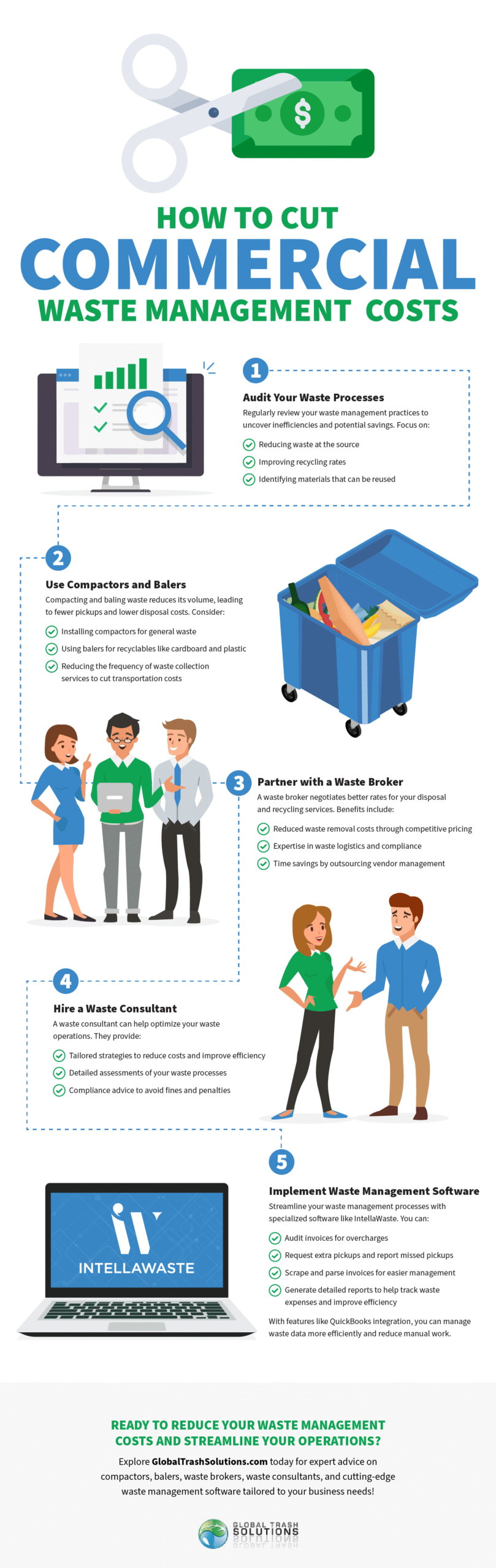
How to Cut Commercial Waste Management Costs
Commercial waste removal is not a fixed overhead expense. The cost of waste management is often inflated by outdated service levels, contract structures, contamination, and unmonitored billing practices.
If your company has experienced a waste management price increase, there is a strong chance your current setup can be optimized. Businesses that take a proactive approach to cost-effective waste management routinely reduce unnecessary hauling fees, eliminate hidden charges, and improve operational efficiency.
Below are practical, scalable ways to lower waste management costs without sacrificing compliance or sustainability.
Why Waste Management Prices Keep Rising
Before reducing expenses, it helps to understand what drives the price of waste management in the first place.
Several factors influence waste management prices, including:
- Landfill tipping fee increases
- Fuel and transportation costs
- Service frequency
- Container size and type
- Contamination penalties
- Contract escalation clauses
Many businesses assume rising bills are unavoidable. In reality, invoice errors, automatic renewals, and mismatched service levels are common contributors to unnecessary increases in the cost of waste management.
A structured audit often reveals immediate savings opportunities.
Step 1: Audit Your Current Waste Services
The fastest way to reduce waste management costs is to evaluate what you are currently paying for.
A proper audit should answer:
- Are container sizes aligned with actual waste volume?
- Is pickup frequency appropriate?
- Are you paying for unused equipment?
- Have rates increased beyond contract terms?
- Are contamination fees recurring?
Many organizations discover they are over-serviced, meaning they are paying for more frequent pickups than necessary. Adjusting service frequency alone can significantly lower the overall price of waste management.
Invoice audits also uncover billing inconsistencies that quietly inflate monthly expenses.
Step 2: Optimize Service Levels and Equipment
The physical setup of your waste program directly affects the cost of waste management.
If your waste volume is high but compactable, installing compactors or balers can reduce hauling frequency. Fewer hauls translate directly into lower waste management prices over time.
For lower-volume generators, downsizing container sizes or consolidating service lines may create savings.
Equipment decisions should be based on:
- Waste stream type
- Volume patterns
- Space constraints
- Labor efficiency
- Long-term hauling costs
Strategic equipment planning turns waste operations into a measurable cost-control strategy rather than a reactive expense.
Step 3: Review and Renegotiate Contracts
A hidden driver of waste management price increase is contract structure.
Many service agreements include:
- Automatic renewal clauses
- Annual rate escalators
- Fuel surcharges
- Environmental fees
- Administrative charges
Without oversight, these clauses steadily raise the price of waste management year after year.
Contract benchmarking against local market rates can reveal whether you are paying above industry standards. Renegotiation or rebidding services often reduces long-term waste management costs, especially for multi-location businesses.

Step 4: Reduce Waste at the Source
The most reliable way to lower the cost of waste management is to generate less waste.
Source reduction strategies may include:
- Improved recycling programs
- Employee education on contamination
- Packaging adjustments
- Vendor coordination
When diversion increases, landfill volumes decrease. Lower landfill volume means fewer pickups and reduced exposure to landfill-related waste management price increases.
Tracking diversion metrics also strengthens sustainability reporting.
Step 5: Implement Waste Tracking Technology
Waste tracking software provides visibility into:
- Pickup frequency
- Container utilization
- Invoice trends
- Recurring fees
- Rate escalations
Data transparency prevents unnoticed waste management price increases and supports long-term cost-effective waste management strategies.
Organizations that monitor waste data quarterly rather than annually are more likely to maintain stable waste management prices over time.
What Cost-Effective Waste Management Really Means
Cost-effective waste management is not about choosing the cheapest hauler. It involves:
- Aligning service levels with actual need
- Controlling contract terms
- Reducing waste volume
- Preventing billing errors
- Leveraging equipment strategically
When these elements work together, the overall cost of waste management becomes predictable and controllable.
Take Control of Your Waste Management Costs
If your business is facing rising waste management costs or ongoing waste management price increases, a structured review can uncover measurable savings. Global Trash Solutions provides waste consulting and waste brokering services designed to optimize contracts, reduce service inefficiencies, and control the long-term cost of waste management.
Our team analyzes waste management prices, service levels, equipment usage, and billing structures to build a cost-effective waste management strategy tailored to your operations. With independent vendor relationships and market benchmarking, we help businesses lower the price of waste management without disrupting daily operations.
Contact Global Trash Solutions today to get started on reducing your waste management costs.
Recent Post
Types of Commercial Waste Streams Explained
Nearly every business generates multiple types of waste, but those materials do not…
Read More >Recycling Contamination: Causes and Solutions
Recyclable material can quickly lose its value when food residue, plastic film, or…
Read More >